
Your Bathroom Remodel Planning Guide: Costs, Timelines, and What to Expect
You’ve been looking at the same builder-grade bathroom for years. The cheap vanity, the caulk that’s turned gray, the shower tile that never quite looked right. You know you want to remodel, but every time you start researching, you get overwhelmed by conflicting advice, budget horror stories, and contractors who won’t return calls.
This guide walks you through exactly how to plan a bathroom remodel from start to finish—with real Gwinnett County costs, honest timelines, and the decisions you’ll actually need to make. No fluff. No sales pitch. Just the planning framework homeowners wish they had before they started.
Table of Contents
- Who This Guide Is For
- Realistic Bathroom Remodel Costs in Gwinnett County
- How Long a Bathroom Remodel Actually Takes
- The Five Phases of a Bathroom Remodel
- What Pushes Costs Up (and What Keeps Them Down)
- The 8 Decisions You’ll Need to Make
- Red Flags When Hiring a Contractor
- Common Questions About Bathroom Remodels
Who This Guide Is For
First-Time Remodelers
You’ve never hired a contractor before. You’re worried about getting ripped off, making expensive mistakes, or ending up with a half-finished project. You need a clear roadmap before you call anyone.
Budget-Conscious Homeowners
You want quality work, but you’re not interested in luxury finishes or unnecessary upgrades. You need to know where you can save money without sacrificing durability or creating future problems.
Planning-Phase Researchers
You’re 3-6 months out from starting. You want to understand the full process, set a realistic budget, and make informed decisions before you contact contractors. You value transparency over sales pressure.
Realistic Bathroom Remodel Costs in Gwinnett County
Online calculators give you ranges so wide they’re meaningless. Here’s what bathroom remodels actually cost in Gwinnett County in 2025, based on real projects with licensed contractors, proper permits, and quality materials.
Baseline planning number: $200-$300 per square foot for a full remodel. This includes demolition, plumbing, electrical, tile, fixtures, cabinetry, and labor. It does not include luxury finishes, structural changes, or significant plumbing relocation.
Cost Reality Check: If a contractor quotes you $8,000 for a “full bathroom remodel,” they’re either leaving out major costs, planning to use substandard materials, or won’t pull permits. In Gwinnett County, a legitimate full remodel starts around $15,000 minimum for the smallest bathrooms.
How Long a Bathroom Remodel Actually Takes
Most bathroom remodels in Gwinnett County take 3-6 weeks from demolition to final walkthrough. That timeline assumes the contractor already has your permits, materials are ordered in advance, and there are no surprise plumbing or structural issues behind the walls.
Add another 2-4 weeks before demolition for design finalization, material selection, permit processing, and scheduling. Total planning-to-completion timeline: 6-10 weeks.
Pro Tip: The cleanest timeline predictor is tile work. If you’re doing custom tile patterns, intricate layouts, or floor-to-ceiling installation, add at least one extra week. Tile labor is precise, can’t be rushed, and weather affects drying time.
The Five Phases of a Bathroom Remodel
Every bathroom remodel follows the same basic sequence. Understanding these phases helps you plan realistically, ask better questions during contractor consultations, and catch problems early.
Phase 1: Design and Planning
This is where most homeowners underestimate the time required. You’re not just picking tile colors—you’re making decisions about layout, fixture locations, lighting placement, storage solutions, and material specifications.
What happens: Initial consultation, measurements, layout options, material selection, detailed quote, permit application, scheduling. Plan for 2-3 weeks if you’re decisive, 4-6 weeks if you need time to research options or compare contractors.
Your job: Make decisions. The faster you finalize tile, fixtures, vanity style, and layout, the faster the project moves. Indecision here delays everything downstream.
Phase 2: Demolition
This is the messiest, loudest, and fastest phase. A full bathroom demo typically takes 1-2 days. Everything comes out: fixtures, tile, drywall, sometimes subfloor if there’s water damage.
What you’ll see: This is when hidden problems surface—rotted subfloors, outdated plumbing, electrical that’s not up to code. Good contractors budget contingency time for this. Bad contractors act surprised and hit you with change orders.
Expect dust everywhere. Seal off the work area with plastic sheeting, but know that fine dust will still migrate through your HVAC system. Run air purifiers in adjacent rooms.
Phase 3: Rough-In (Plumbing, Electrical, Framing)
This phase takes 3-7 days depending on complexity. Plumbers relocate pipes, electricians run new circuits, framers build any new walls or structural changes. At the end of this phase, Gwinnett County inspectors come out to verify everything meets code before walls get closed up.
Critical checkpoint: This is your last chance to change fixture locations without major rework. Walk through with your contractor. Confirm outlet locations, light switch placement, shower valve height. Once drywall goes up, changes get expensive.
Permit inspection delays: County inspectors schedule 3-5 days out. If your contractor hasn’t scheduled the rough-in inspection in advance, your project sits idle waiting for approval.
Phase 4: Tile, Cabinets, and Major Finishes
This is where your bathroom starts looking like a bathroom again. It’s also the longest phase—typically 2-3 weeks. Tile work can’t be rushed. Each layer (waterproofing, mortar, tile, grout) requires drying time.
What happens: Tile installation (floor and walls), vanity and cabinet installation, countertop templating and installation, shower door measurement. Tile is usually first, then cabinets, then countertops (which require exact measurements once cabinets are in place).
Weather matters: High humidity or cold temperatures slow tile adhesive and grout curing. Expect delays if you’re remodeling in January or during Georgia’s muggiest summer weeks.
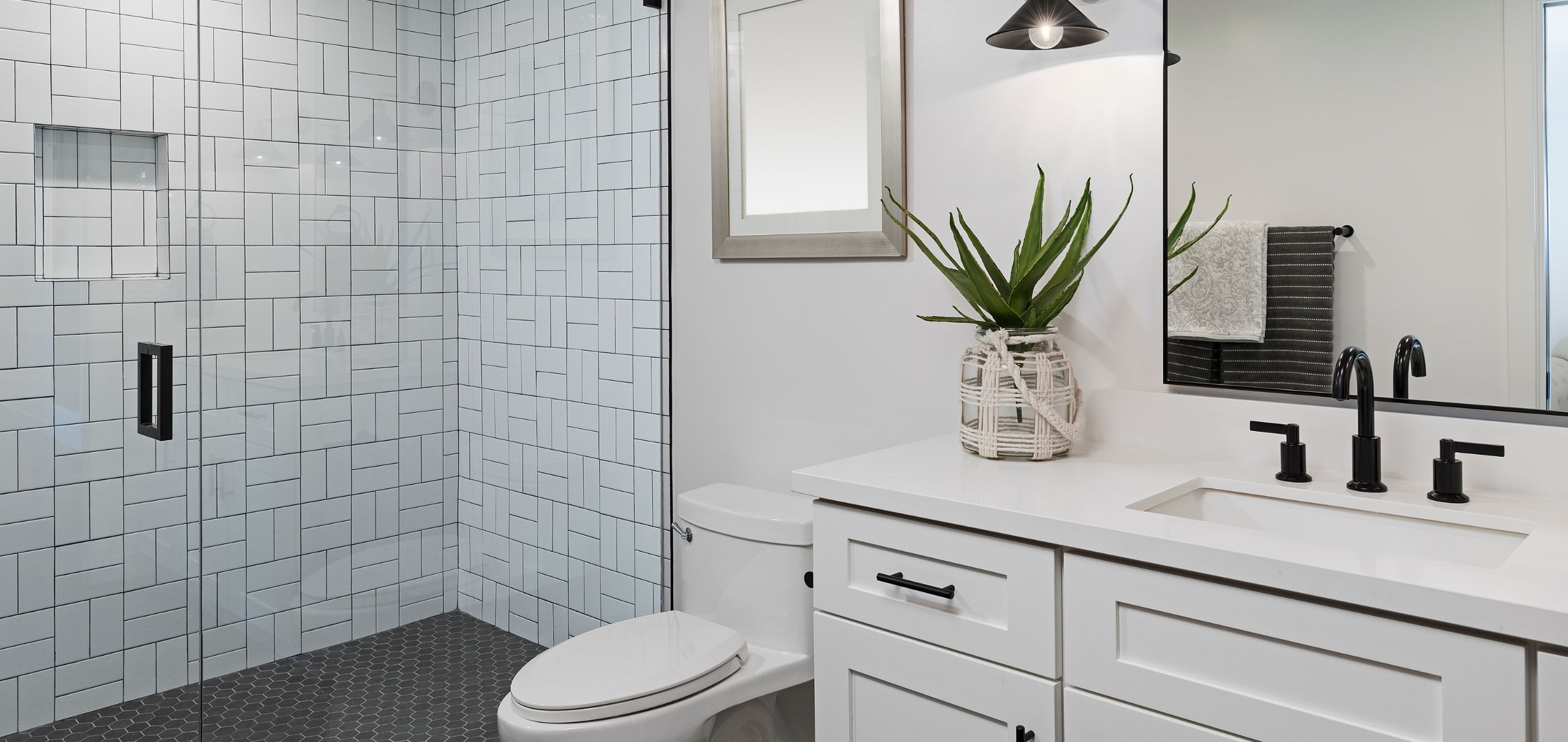
Phase 5: Final Fixtures, Paint, and Walkthrough
The final 3-5 days. Plumbers install toilets, faucets, and showerheads. Electricians install light fixtures. Painters do touch-ups. Glass installers mount shower doors. Then comes the final inspection and walkthrough.
Your walkthrough checklist: Test every faucet and drain. Check for grout haze on tile. Confirm all outlets and lights work. Look for paint overspray or caulk smudges. Open and close cabinet doors and drawers. Run the shower for five minutes and check for leaks underneath.
Don’t make final payment until the punch list is complete. Professional contractors expect this. Unprofessional ones disappear after they’re paid.
What Pushes Costs Up (and What Keeps Them Down)
Understanding cost drivers helps you make informed trade-offs. You don’t need to cheap out everywhere—but knowing where money goes lets you invest strategically in the features that matter most to you.
↑ What Pushes Costs Up
- Moving plumbing or electrical — relocating drains, water lines, or outlets requires opening walls, rerouting systems, and additional inspections
- Custom tile work — intricate patterns, mosaics, herringbone layouts, or floor-to-ceiling installation doubles tile labor costs
- Structural changes — moving walls, enlarging doorways, or raising ceilings requires engineering, permits, and framing work
- Luxury materials — natural stone, high-end tile (above $8/sq ft), custom cabinetry, or frameless glass enclosures
- Unexpected repairs — rotted subfloors, outdated wiring, mold remediation, or foundation issues discovered during demo
↓ What Keeps Costs Down
- Keep fixtures in existing locations — using the same toilet, sink, and shower drain locations avoids plumbing relocation costs
- Choose standard tile patterns — straight-set or brick-lay patterns cost half what herringbone or diagonal layouts cost
- Use stock vanities — quality stock cabinets from major brands cost 40-60% less than custom builds
- Opt for standard sizes — using industry-standard shower pans, vanity widths, and door sizes reduces custom fabrication
- Plan ahead — ordering materials before demo starts avoids rush shipping fees and project delays
Smart Trade-Off: Spend more on tile quality and installation (you’ll look at it every day for 15+ years). Save money on fixtures—mid-range faucets and showerheads perform nearly as well as luxury brands, and you can upgrade them later without opening walls.
The 8 Decisions You’ll Need to Make
Every bathroom remodel requires the same core decisions. Making these choices before you contact contractors speeds up the quoting process and helps you compare bids accurately. You don’t need to know exact product SKUs—but having directional preferences helps.
1. Layout: Keep or Change?
Are you keeping the toilet, sink, and shower in their current locations, or do you want to reconfigure the space? Moving fixtures adds $2,000-$5,000 but can dramatically improve functionality.
2. Shower or Tub?
Tub-to-shower conversions are popular in primary bathrooms. Walk-in showers feel more spacious and modern. But if it’s your only bathroom or you have young kids, keeping a tub makes resale sense.
3. Tile: Where and What?
Floor tile is standard. Shower walls are expected. The cost decision is whether you tile full-height around the tub/shower or stop at 6 feet. Full-height looks better and protects against moisture, but adds labor cost.
4. Vanity: Stock or Custom?
Stock vanities from Home Depot, Lowe’s, or specialty cabinet suppliers offer great quality at half the cost of custom builds. Custom makes sense if you have an unusual space or need specific storage solutions.
5. Countertop Material
Quartz is the current standard—durable, low-maintenance, good resale value. Granite works but requires sealing. Marble looks stunning but stains easily in high-use bathrooms. Budget $60-$120 per square foot installed.
6. Shower Enclosure Style
Framed enclosures cost $400-$800. Semi-frameless run $800-$1,400. Fully frameless (the current luxury standard) cost $1,500-$2,500. All three function identically—it’s purely aesthetics and budget.
7. Lighting Plan
Minimum: vanity lighting and ceiling fixture. Better: add recessed can lights over the shower and task lighting near mirrors. Best: include dimmers and consider separate zone controls for flexibility.
8. Ventilation
Georgia’s humidity makes exhaust fans non-negotiable. If your current fan is loud, weak, or vents into the attic instead of outside, upgrade it during the remodel. Budget $200-$400 for a quality, quiet fan properly vented.
You don’t need final answers on all eight before contacting contractors—but having preferences helps them quote accurately. “I want to keep the current layout, do a tub-to-shower conversion, tile the full shower wall, and use a stock vanity” gives a contractor everything they need to build a realistic estimate.
Red Flags When Hiring a Contractor
Most contractor horror stories start with ignored warning signs. These red flags don’t guarantee a bad experience—but they should make you ask more questions or walk away.
Asks for large upfront payment — legitimate contractors ask for 10-30% deposits, not 50%+ before work starts
Won’t pull permits — “permits are a waste of money” means code violations and resale problems when you sell
No written contract or vague scope — professional contractors provide detailed, written agreements with payment schedules
Pressure tactics or same-day discounts — “this price is only good today” is a sales gimmick, not how remodeling works
Can’t provide references or portfolio — every established contractor has completed projects they can show you
No proof of insurance — unlicensed, uninsured contractors leave you liable for injuries or property damage
Unrealistic timeline promises — “we can finish your bathroom in 10 days” usually means cutting corners or juggling multiple jobs
Poor communication from the start — if they’re hard to reach during the sales process, they’ll be impossible to reach during construction
Trust Your Gut: If something feels off during the consultation—vague answers, defensive responses to questions, reluctance to provide details—listen to that instinct. Professional contractors welcome questions and provide clear, confident answers.
Related Resources
If you’re planning a bathroom remodel in Gwinnett County, these resources will help you dig deeper into specific aspects of the process:
- Our Bathroom Remodeling Services — see the full range of bathroom projects we handle
- Grayson Bathroom Project — a real example of a completed bathroom remodel with photos
- All Bathroom Remodel Articles — additional guides and planning resources
- Service Areas — confirm we work in your Gwinnett County location
- All Remodeling Services — explore other home improvement projects beyond bathrooms
Common Questions About Bathroom Remodels
How long does a typical bathroom remodel take in Gwinnett County?
+
Most bathroom remodels in Gwinnett County take 3-6 weeks from demolition to final walkthrough. Simple cosmetic updates (fixtures, tile, vanity) run closer to 3 weeks. Full gut remodels with plumbing relocation, custom tile work, and structural changes typically need 5-6 weeks.
Weather delays, material backorders, and permit processing can add time. Add another 2-4 weeks before demolition for design, material selection, and permit approval—total planning-to-completion timeline is typically 6-10 weeks.
What’s a realistic budget for remodeling a bathroom in Georgia?
+
In Gwinnett County, expect $15,000-$22,000 for a quality hall bath remodel (60-75 sq ft) and $28,000-$45,000 for a primary bathroom (120-180 sq ft). These ranges include professional labor, quality materials, proper permits, and standard finishes.
Budget $200-$300 per square foot as a baseline for planning. Luxury finishes, structural changes, or significant plumbing relocation push costs higher. Cosmetic-only updates with fixtures staying in place run toward the lower end.
Do I need permits for a bathroom remodel in Gwinnett County?
+
Yes, if you’re moving plumbing, relocating fixtures, doing electrical work, or making structural changes. Simple cosmetic updates (painting, replacing a vanity without moving plumbing, installing new fixtures in existing locations) typically don’t require permits.
Gwinnett County requires permits for any work affecting plumbing, electrical, or structural systems. Skipping permits creates code violations, complicates resale, and can void homeowners insurance if problems arise. Professional contractors handle permit applications and inspections as part of their service.
Should I remodel my bathroom myself or hire a contractor?
+
Hire a licensed contractor for any project involving plumbing relocation, electrical work, tile work, or structural changes. These require specialized skills, proper tools, and code knowledge. Mistakes in waterproofing, tile installation, or plumbing create expensive problems down the road.
DIY works for painting, replacing hardware, or installing a new vanity without moving plumbing. Most Gwinnett County homeowners who attempt full DIY bathroom remodels end up hiring contractors to fix mistakes, ultimately spending more than hiring professionals from the start.
What are the biggest cost drivers in a bathroom remodel?
+
The five biggest cost drivers are:
- Tile work — especially custom patterns, mosaics, or floor-to-ceiling coverage
- Plumbing relocation or fixture upgrades — moving drains and supply lines
- Custom cabinetry or built-ins — versus stock vanities
- Structural changes — moving walls, enlarging doorways, raising ceilings
- Luxury finishes — high-end tile, stone countertops, frameless glass enclosures
Labor typically represents 40-50% of your total project cost. Keeping fixtures in existing locations and choosing standard tile patterns are the two fastest ways to control costs without sacrificing quality.
Can I live in my house during a bathroom remodel?
+
Yes, but expect significant inconvenience. Your bathroom will be completely out of service for the duration of the project. If you’re remodeling your only full bathroom, plan to use a neighbor’s facilities, gym membership, or temporary solutions.
Dust, noise (especially during demo), and daily contractor traffic are unavoidable. Professional contractors use plastic sheeting to contain dust and work set hours, but it’s still disruptive. If you have another bathroom in the house, the inconvenience is manageable. If not, consider staying elsewhere for the 3-6 week construction period.
What should I look for when comparing contractor quotes?
+
Look beyond the bottom-line number. A good quote includes:
- Detailed scope of work (what’s included, what’s not)
- Specific materials with product names or quality tiers
- Timeline with phases and milestone dates
- Payment schedule tied to completed phases
- Permit handling and inspection responsibilities
- Warranty terms on labor and materials
- How changes and unexpected issues are handled
If one quote is significantly lower than others, ask why. It often means cheaper materials, skipped permits, or unlicensed subcontractors. Compare apples-to-apples: same tile quality, same fixture tier, same scope.
How do I prepare my house before the remodel starts?
+
Remove everything from the bathroom: toiletries, towels, cabinets, medicine cabinet contents. Clear a path from your driveway to the bathroom for material delivery and debris removal. If the bathroom shares a wall with a bedroom or closet, move valuables away from that wall.
Discuss parking with your contractor—they’ll need driveway or street space for work trucks and material deliveries. If you have pets, plan how to keep them away from the work area and secure during contractor arrivals and departures. Notify close neighbors about the project timeline.
Ready to Start Planning Your Bathroom Remodel?
We don’t do high-pressure sales calls or pushy estimates. Just a straightforward conversation about your bathroom, your timeline, and what a quality remodel actually costs in Gwinnett County. No pressure. No pitch.